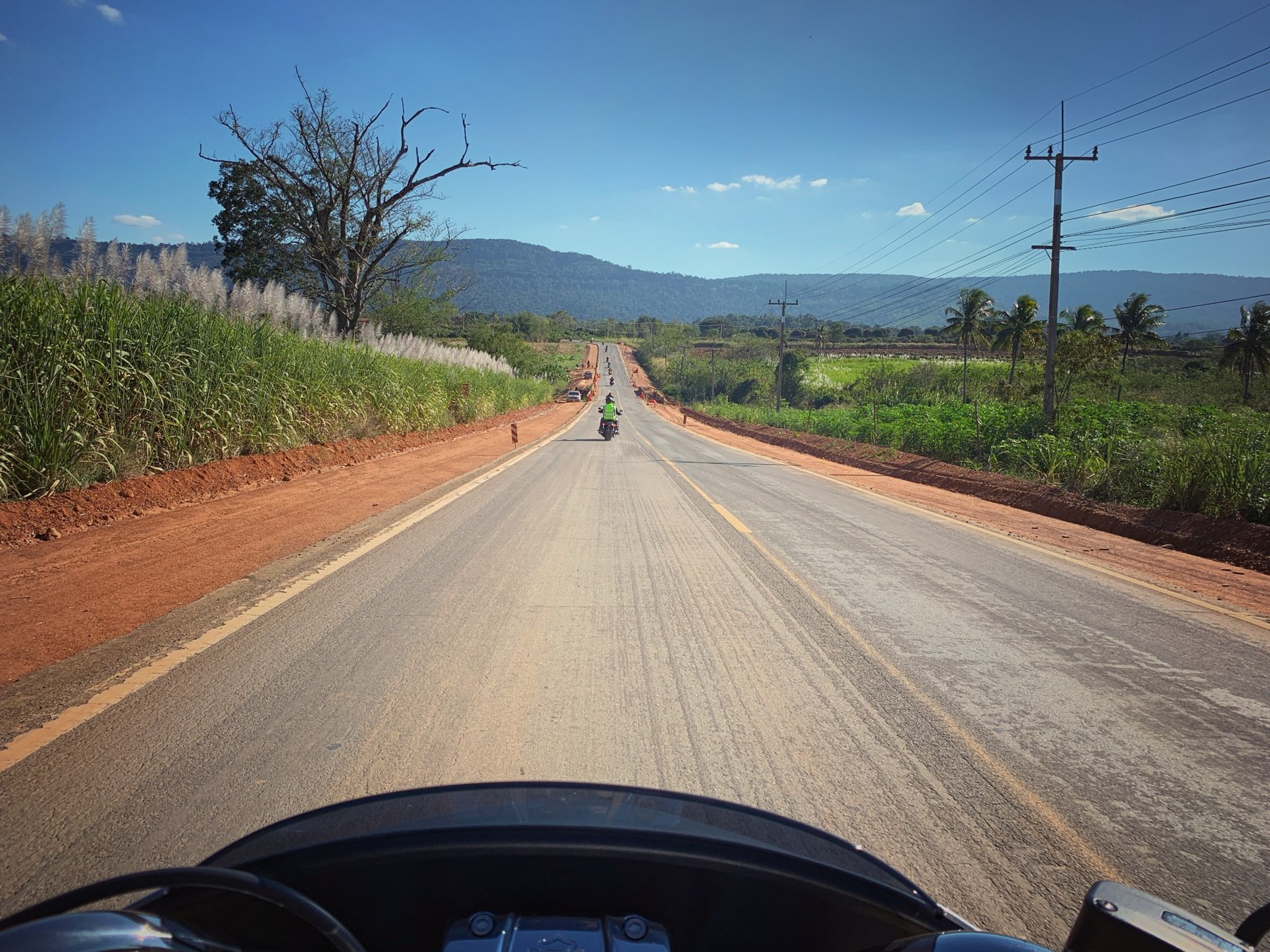
Riding as a Group: How to Enjoy the Trip and Get Everyone Home Safely
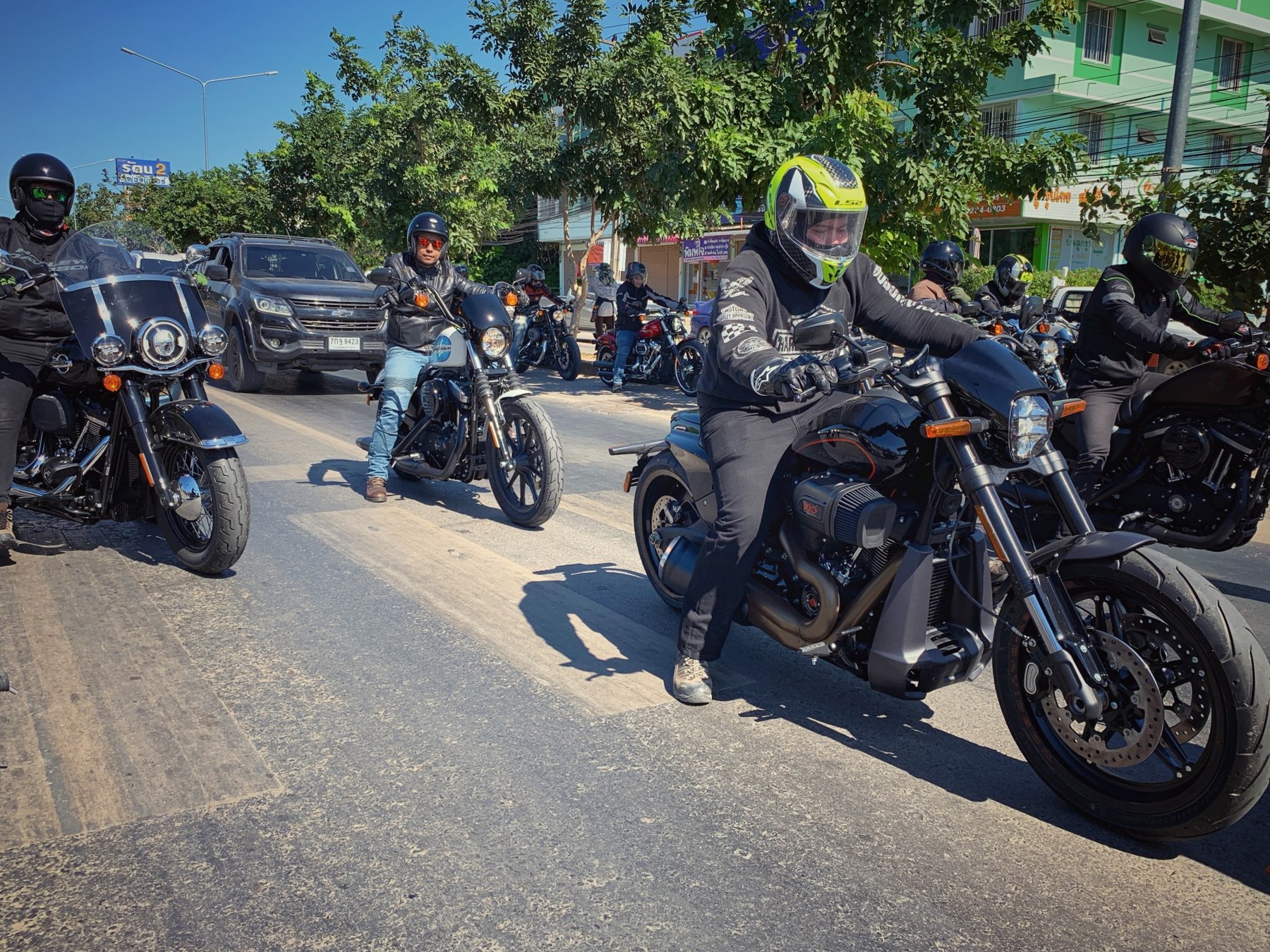
The fun of a ride with friends begins with the first message in the group chat, the sound of engines starting in the morning, and the stories shared over a meal along the way. Before those good memories can take shape, though, a few details need to be clear: meeting times, following distances, regrouping points, and how to look after friends who ride at a different pace.
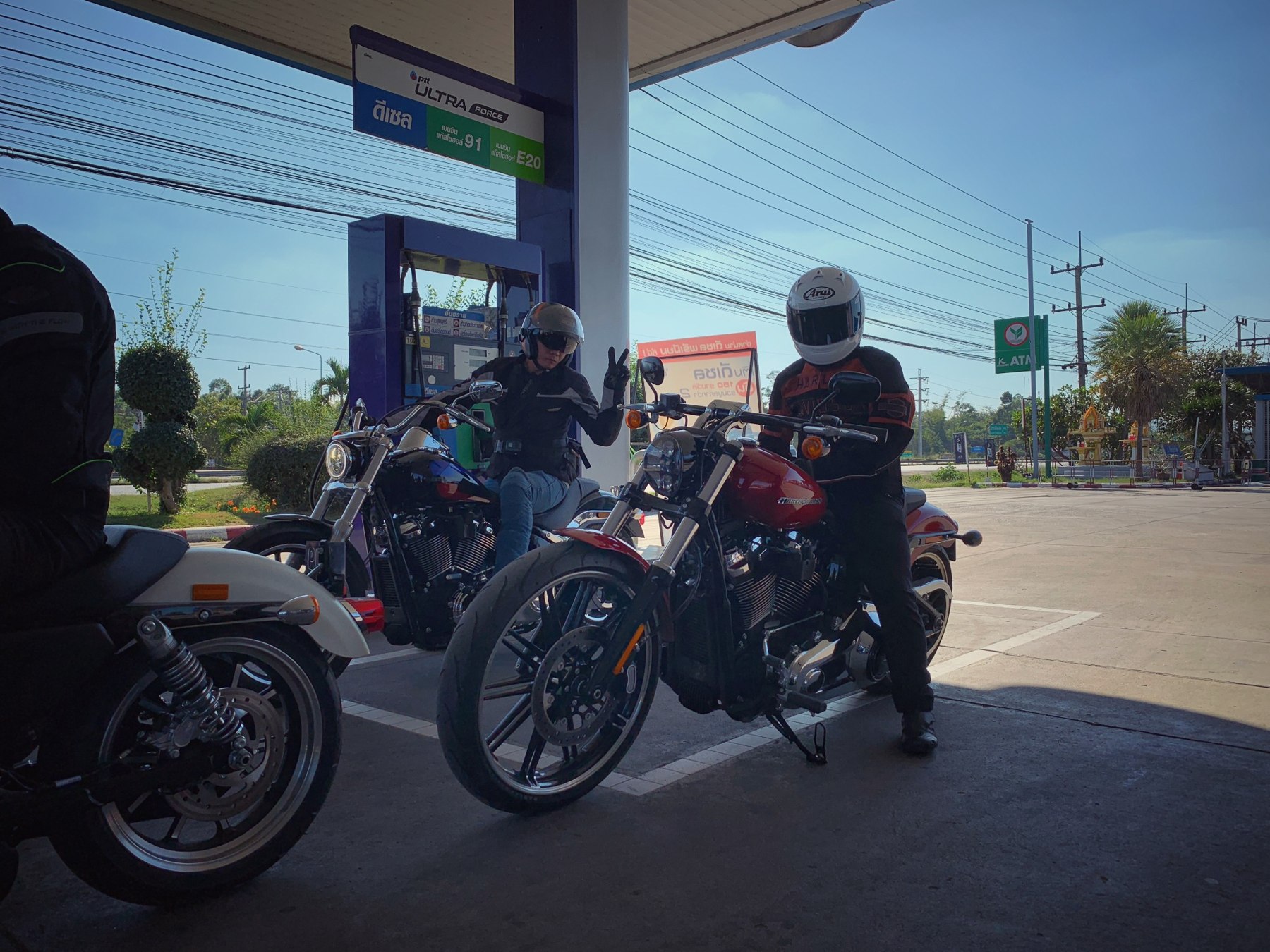
On a weekend morning, motorcycles begin arriving at the gas station where everyone has agreed to meet. Some riders have already filled their tanks. Others have just ordered coffee. Someone is still securing a bag to the rear seat, while a message appears in the group chat: “Just leaving home.”
It is a familiar scene for anyone who has ridden with a group, especially friends who have been riding together long enough to feel that little preparation is needed. Just follow each other, and everyone will get there.
Once the bikes leave the station, however, the differences begin to show. One rider prefers a brisk pace; another enjoys taking in the scenery. Some know the route well, while someone else is taking a new motorcycle on its first trip. As the gaps grow, the relaxed feeling of a day out together can turn into a worry about keeping up.
A good group ride starts with understanding that everyone may share a love of motorcycles, but they do not necessarily share the same riding rhythm.
01Make the Meeting Clear Before Starting the Bikes
“See you at seven in the morning” can mean different things to different people. Some understand it as the arrival time. Others think it means departure. Some still expect time to sit down for breakfast before setting off.
For a relaxed start, specify both the meeting time and the departure time, and share an exact map pin. This matters particularly at stations with several entrances, or when another branch sits on the opposite side of the road.
Before the ride, everyone should also have a rough idea of the route. Are there mountain roads or sections that need extra care? What time does the group expect to be home? These details help riders who are less familiar with longer trips decide whether the ride suits them.
Prepare the motorcycle in advance, too. Check the tires, brakes, lights, and luggage straps, and fill the tank whenever there is an opportunity at a fuel stop. Riders should get enough rest, bring appropriate protective gear, and avoid alcohol before and during the ride.
That leaves the morning free for catching up with friends, instead of wondering whose bike is still not ready to leave the station.
02Take Five Minutes to Talk Before Setting Off
Even with the same group of friends, a short conversation before departure is useful. The route, weather, and people joining the ride may be different each time.
At a minimum, agree on who leads, who rides at the back, where to stop, and what to do if someone becomes separated. Go over a few simple signals everyone understands, such as slowing down, preparing to stop, or changing to single file.
A good leader knows both the road ahead and how the riders behind are doing.
The leader needs to give others time to read the situation, signal early, and maintain a pace the group can manage. The sweep rider at the back should be experienced, watching for anyone falling behind or needing to stop. Their job is not to keep pushing riders ahead to catch up.
With a large turnout, smaller groups are easier to look after. The Motorcycle Safety Foundation recommends groups of around five to seven motorcycles, each with its own leader and sweep rider. This is a guide to keeping the group manageable, not a reason to squeeze the bikes closer together to preserve an unbroken formation.
03Leave Enough Space to Make Decisions
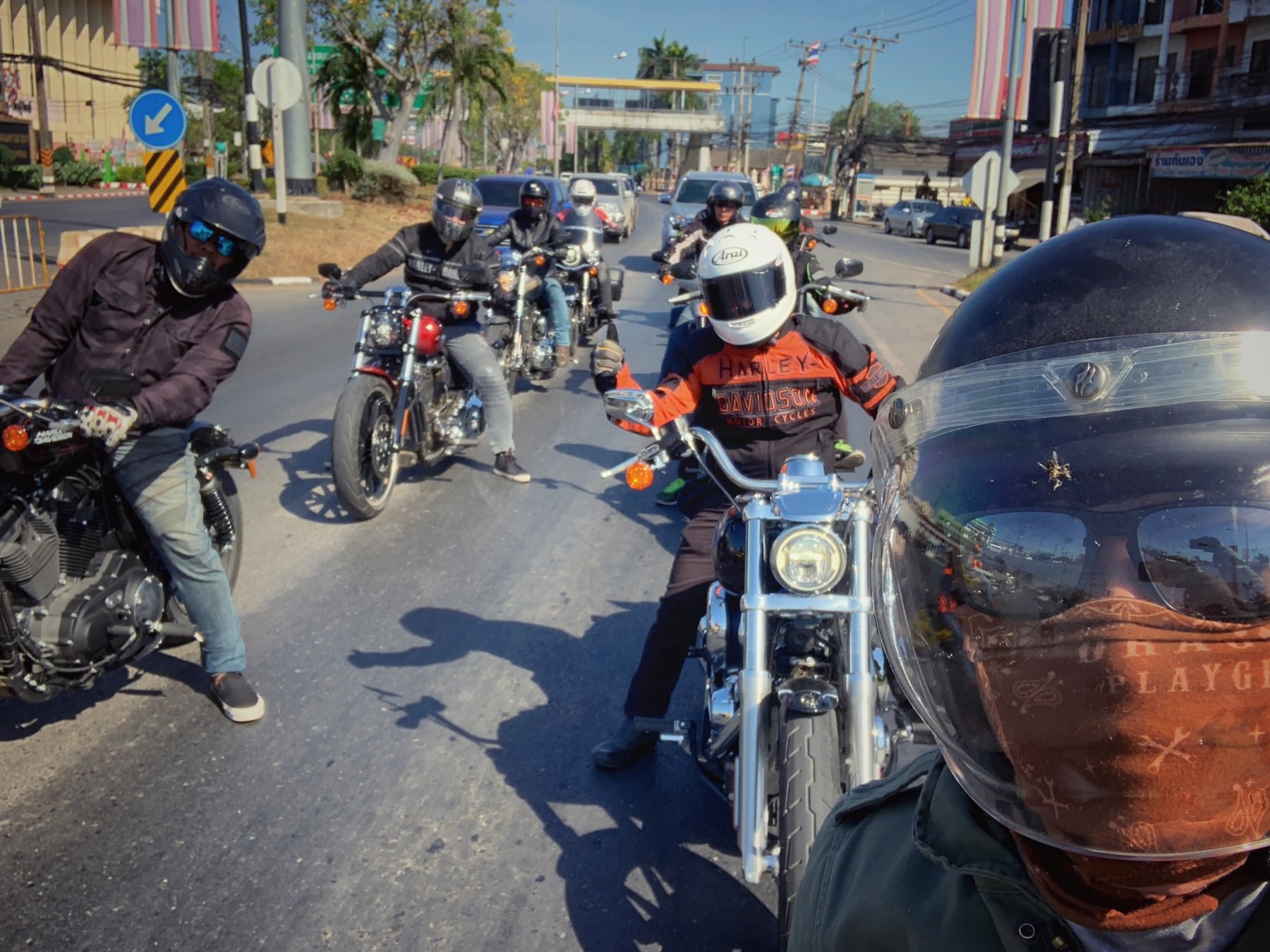
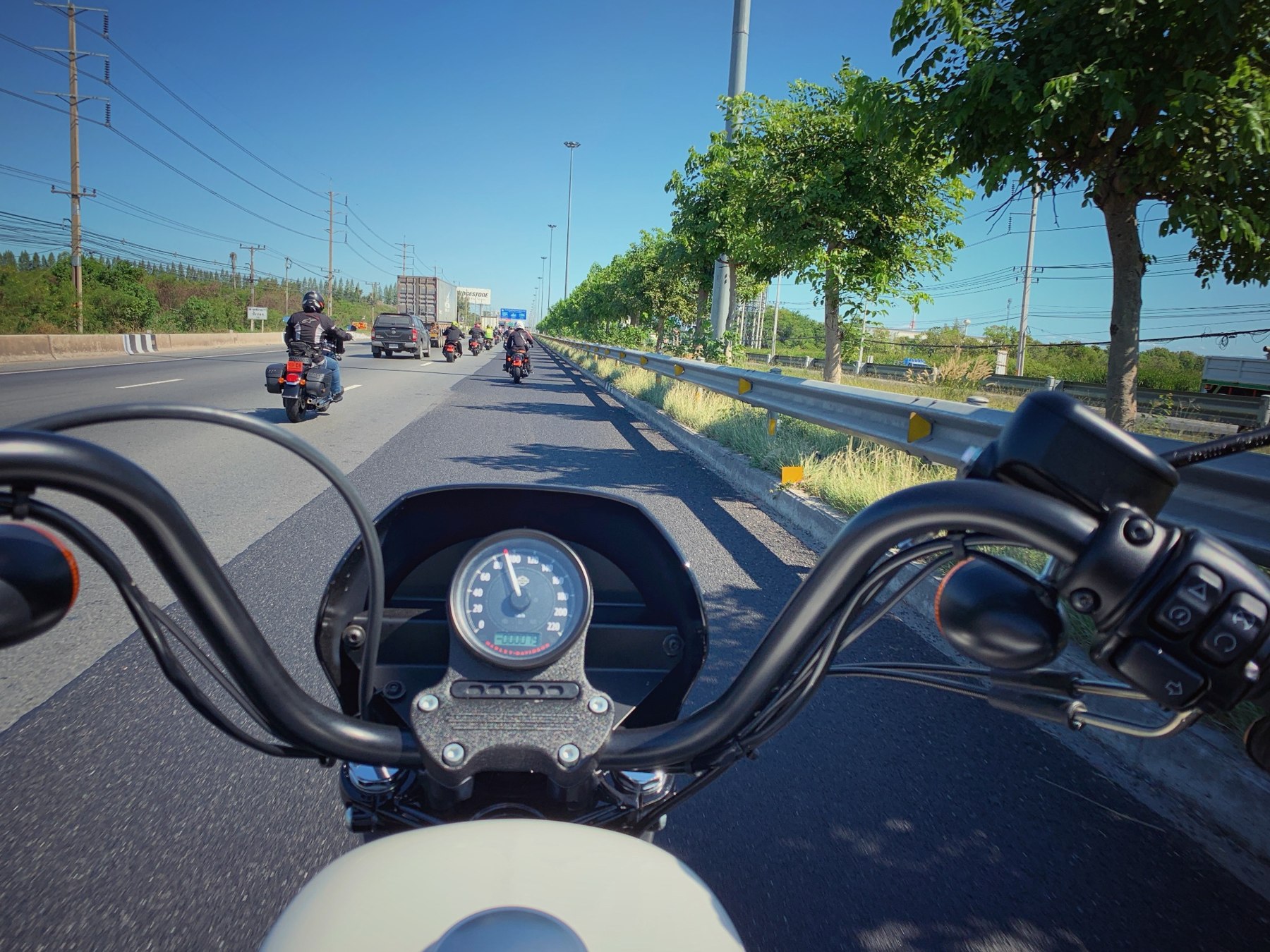
An orderly line of motorcycles can look impressive, and it is tempting to stay close so the group feels united. On the road, however, the space between bikes gives us time to look, decide, and brake when something unexpected happens.
A staggered formation, with riders alternating between the left and right portions of the same lane, can work on straight roads with suitable surfaces and good visibility. Each rider still needs their own space. Do not ride side by side with no room to maneuver.
A general reference is to leave at least about two seconds behind the motorcycle ahead in the same track as you. Increase that gap when the road is wet, visibility is poor, or conditions require more time to react.
An easy way to judge the gap is to choose a fixed point beside the road. When the bike ahead passes it, start counting until your bike reaches the same point. Measuring the gap in seconds adjusts with your speed more effectively than remembering a fixed distance in meters.
On curves, narrow roads, poor surfaces, or anywhere riders need more room to choose their line, change to single file and allow sufficient space. The formation should change with the road; there is no need to keep the same arrangement for the entire trip.
Two Formations for Different Conditions
Top-down view • Arrow shows the direction of travel
Staggered Formation
STAGGERED FORMATIONFor straight roads with good surfaces and visibility. Leave at least 2 seconds behind the bike in the same track, and at least 1 second behind the bike in the alternate track.
Single-File Formation
SINGLE-FILE FORMATIONFor curves, narrow roads, poor surfaces, or limited visibility. Leave at least 2 seconds between bikes, and increase the gap as conditions require.
Do not ride side by side. When conditions change, riders do not need to hold a fixed left, right, or center position. These diagrams show the riding order and time gaps, not distances drawn to scale. Choose a safe position within your lane for the road ahead.
Original diagrams created for this article, with following-distance guidance from MSF’s Guide to Group Riding.
04Red Lights Can Split the Group. Meeting Points Bring It Back Together.
The stressful moments are often not on the long stretches of open road. They come when the riders ahead make it through a green light while you remain behind the stop line, or when a car moves between the bikes and your friends disappear from view.
If everyone knows the next meeting point, the situation becomes much easier to handle. Obey the traffic light and continue when it is safe, without rushing to close the gap immediately.
Regrouping points should be easy to enter and leave, with enough room for the motorcycles: a gas station, parking area, or restaurant agreed on beforehand. Avoid narrow shoulders, places just beyond a bend, or areas near intersections where approaching drivers may not see the group in time.
Everyone should have the stop locations and contact numbers on their phone. If you need to make a call or read a message, park somewhere safe first.
Each rider must assess intersections, lane changes, and overtakes independently. Just because the leader made it through does not mean there is still enough room for you. Riding in a group does not give anyone the right to block an intersection or hold up other traffic so their friends can pass.
05Give Slower Riders Room to Feel Comfortable
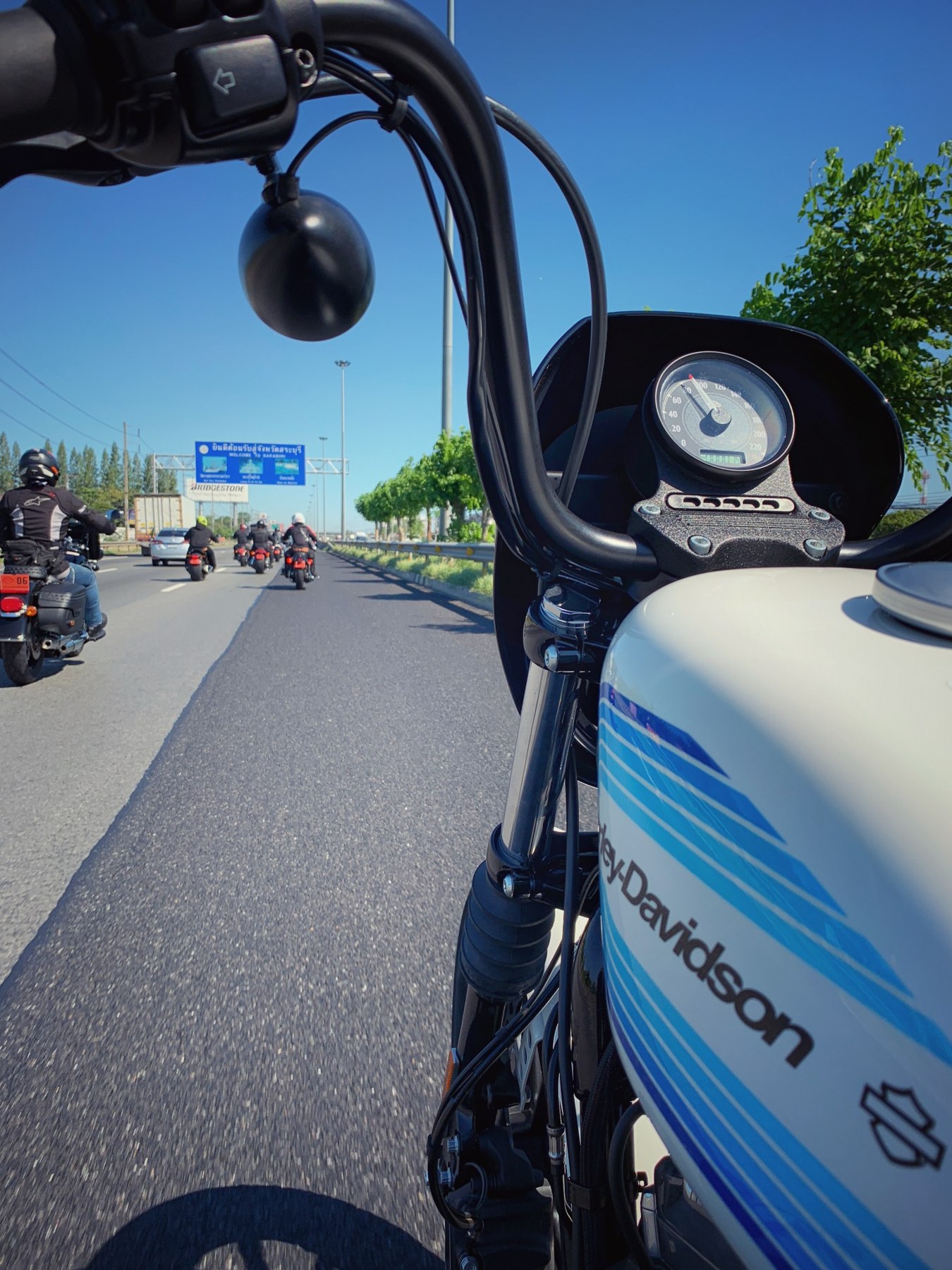
One group may include people who ride every weekend, someone returning after several years away, and others still getting to know their motorcycles. Setting the pace around the most confident rider can leave everyone else concentrating on keeping up rather than reading the road ahead.
For newer riders, a position near the front, behind a leader who maintains an appropriate pace, can reduce the pressure of chasing the entire group. The route, distance, and pace through corners should also account for the least experienced member. If preferences differ considerably, split into groups and meet at the same rest stop.
Along the way, friends can help by checking their mirrors periodically. If the rider behind is dropping back, ease the pace smoothly when traffic conditions allow. Do not brake suddenly or stop to wait in an active traffic lane.
The atmosphere within the group matters just as much as riding positions. A joking “Why are you so slow?” may be funny to the person saying it, but it can make the person hearing it try to ride beyond a pace they can control.
Instead, ask whether the last section was tiring, whether anything felt uncomfortable, or whether they would like a longer break. You may discover they have been dealing with strong winds, unfamiliar handlebars, or a motorcycle that is not behaving normally.
A supportive group makes it easy to say “Can we slow down a little?” before anyone feels forced to keep pushing.
06The Last Rider Needs a Break, Too
The first arrivals may already have taken off their helmets, had a drink, and spent some time chatting. By the time the final motorcycle pulls in, everyone else may feel they have rested enough and are ready to leave.
For the person who has just arrived, though, the break has not even begun.
Set the next departure time so the last rider has a chance to use the restroom, drink some water, and recover. Plan the next stretch around the readiness of the whole group, including passengers who may need a break sooner than the riders.
Do not wait until everyone is exhausted before looking for somewhere to stop, and do not hold so tightly to the schedule that it cannot change. In extreme heat, heavy rain, or when someone is losing concentration, an extra break or a shorter route may make the rest of the trip more enjoyable.
07If Someone Needs to Stop, Put Safety First
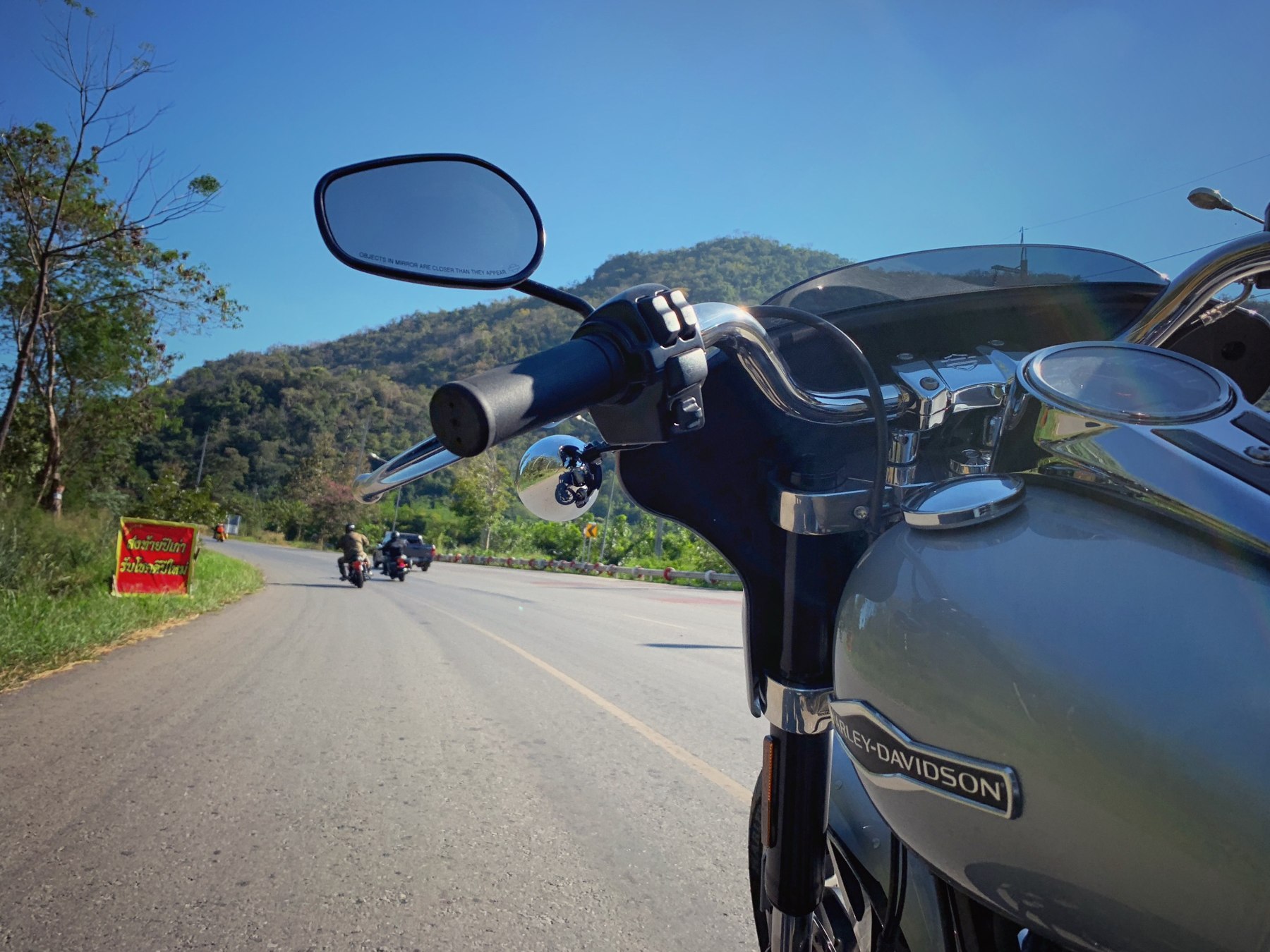
When a motorcycle develops a problem, everyone may want to pull over and help. But several bikes stopped at the roadside without enough space can create additional risk for the group and other road users.
If it can be done safely, move the motorcycle out of the traffic lane to a clearly visible place with sufficient room. Keep only the people needed to help at the scene, while the others continue to an agreed safe waiting point.
If someone is injured, call emergency services and provide help within your knowledge and training. Avoid moving an injured person unnecessarily unless there is immediate danger where they are.
For problems such as a flat tire, a bike that will not start, or a rider who no longer feels able to continue, the group's priority should be finding an appropriate way home. That may mean changing the plan, arranging motorcycle transport, or having someone head back early.
08The Ride Is Not Over When Everyone Splits Up
It is easy to underestimate the ride home because the route feels familiar. By then, however, you may have spent hours on the motorcycle and still face heavy traffic, evening rain, or fading light.
Before going separate ways, check how everyone is feeling. Does anyone still have a long journey ahead? Would another rest help? Do not let the urge to get home quickly make you ignore the fatigue you are beginning to notice.
A short “Home safe” message in the group chat lets friends know everyone has finished the journey, especially those who live farther away.
A good trip can bring together riders who love corners, those who like stopping for photos, and people who simply enjoy an easy ride to breakfast. These differences can work together when the group agrees on a pace from the start and is willing to adjust the plan when necessary.
The group photo outside a cafe may be what we keep to remember the trip. What makes us want to ride together again is knowing that friends looked after one another along the way, and that no one had to push beyond their comfort to feel part of the group.