
S&S Super E: An All-Time Favorite Carburetor
Few aftermarket parts are as closely associated with Harley-Davidson as the S&S teardrop air cleaner. Behind that familiar cover is often a Super E, a carburetor chosen for stock bikes, modified engines, and custom builds alike. What makes it so appealing, how does it work, and is it right for your motorcycle?

Photo: S&S Cycle / J&P Cycles · All rights reserved
For riders of carbureted Harleys, the S&S Super E often makes the list of parts they would like to try. Some enjoy its feel when opening the throttle. Others appreciate the straightforward jet changes and servicing. Many simply like the way it looks on the bike they are building.
Its enduring popularity means there are plenty of replacement parts, rebuild kits, and tuning resources available. Getting it to work well still starts with understanding its components and matching it to the engine. A stumble does not always call for a bigger main jet.
From Racing Carburetors to the Super E “Shorty”

Photo: S&S Cycle / FortNine · All rights reserved
The S&S carburetor story began decades before the Super E. The company introduced its first carburetor in 1967, at a time when improving V-twin engine performance was central to the brand.
In 1975, S&S developed the “Super” family. Subsequent body revisions led to the carburetor known as the Super B, a simple design that became a longstanding part of the custom motorcycle scene.
Another milestone came in October 1990, when the Super E and Super G were introduced together through a development program led by George Smith Jr. Both featured the compact Shorty body and an adjustable accelerator pump to improve response during quick throttle openings.
According to the history recorded by S&S, demand at launch was strong enough to generate a waiting list of more than 10,000 customers. The Super E attracted attention from the beginning and went on to appear on generations of Harley-Davidson motorcycles.
The “Shorty” name reflects its short, compact body. Paired with the teardrop air cleaner, it creates an instantly recognizable look that suits everything from mildly modified stock bikes to customs built almost entirely from scratch.
What Moves When You Twist the Throttle?
The Super E is a butterfly carburetor. Twisting the throttle pulls a cable that rotates the butterfly valve, allowing the engine to draw more air through the intake as operating conditions permit.
The butterfly sits at the engine-side outlet. Ahead of it is a narrowed section called the venturi. On a standard Super E, the bore at the throttle is approximately 1⅞ inches (47.6 mm), while the venturi is approximately 1⁹⁄₁₆ inches (39.7 mm).
These dimensions refer to different measuring points. When comparing carburetors, make sure you know which part of the bore each manufacturer is specifying.
As air passes through the venturi, its speed increases and its static pressure falls. The pressure difference between the float bowl and the air passage helps move fuel through the metering circuits into the airstream before the mixture enters the engine.
Opening the throttle is only part of the process. Airflow, the pressure signal, and fuel delivery must work together, especially when the throttle is opened quickly at low engine speed.
Watch the Circuits in Action
Select idle, a throttle-opening condition, or “Quick throttle” to see which circuits contribute. The passages are spread out to explain the principle; this is not an exact map of every internal drilling.
The Float Bowl: Check It Before Tuning
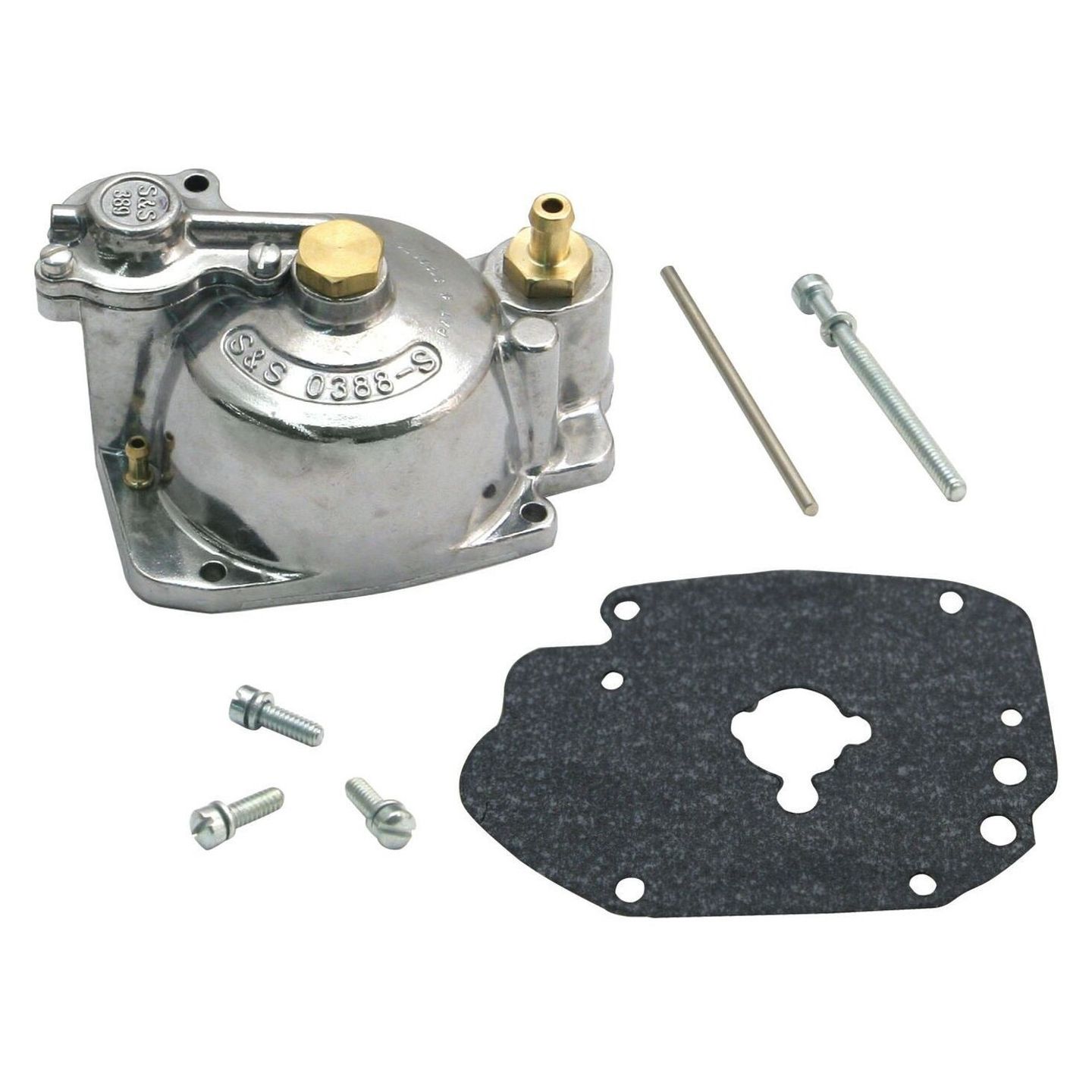
Photo: S&S Cycle / Cycle Gear · All rights reserved
Below the body is the float bowl, sometimes informally called the fuel cup. It holds a supply of fuel ready for the various metering circuits.
The float and inlet needle valve regulate the level. As fuel is used, the float drops and lets more fuel in. As the level rises, it helps close the inlet. The bowl vent provides the pressure reference needed for fuel delivery.
Fuel level affects the mixture. An incorrect level, a needle that fails to seal, or a restricted supply from the tank can cause poor running even when the jet sizes are appropriate.
Before changing jets, confirm that fuel delivery is adequate, there are no leaks, and the float mechanism works correctly.
What Does Each Jet Do?
“Changing the jets” can sound like a single adjustment, but the Super E has several circuits working together.
| Circuit | Main function |
|---|---|
| Idle circuit | Supplies the idle mixture, with the idle mixture screw controlling its adjustment. |
| Intermediate jet | Plays a major role at small throttle openings and in low-to-midrange riding. |
| Main jet | Meters fuel in the main circuit as airflow and the pressure signal increase. |
| Main air bleed | Meters air entering the main circuit and influences when that circuit begins to contribute. |
These circuits overlap. They do not switch from one jet to another at a fixed rpm. Throttle position, engine load, and airflow all play a part.
For everyday riding, the intermediate jet is particularly important. A stumble at a small throttle opening may not need a larger main jet. Likewise, the idle mixture screw cannot correct the mixture throughout the entire operating range.
Later Super E carburetors have a replaceable main air bleed, an update S&S dates to 2004. It provides another way to adjust the onset of the main circuit, but it should be considered after the basics have been checked and the symptoms are understood.
The Accelerator Pump: Help During a Quick Throttle Opening
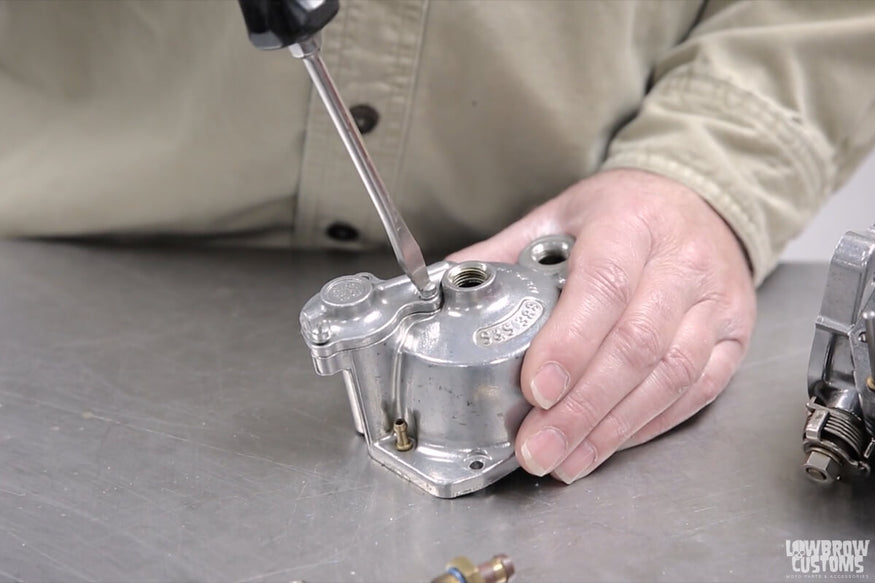
Photo: Lowbrow Customs · All rights reserved
A sudden throttle opening changes intake airflow rapidly. Normal fuel delivery may briefly lag behind, allowing the engine to hesitate or stumble.
The accelerator pump uses throttle linkage to press a diaphragm and send a shot of fuel through a nozzle into the carburetor bore, helping the mixture through this transition.
Remember: the pump delivers fuel as the throttle moves open. It does not keep spraying simply because the throttle is held open.
Increasing pump delivery does not improve performance everywhere. Too much can create an overly rich stumble, and it may hide symptoms caused by incorrect jetting, making diagnosis harder.
The device often called the Super E “choke” is an enrichment/fast idle device. A plunger opens an additional mixture circuit for cold starting and warm-up; it does not close an air-inlet plate like some choke designs. Once the engine is warm, it must be fully closed. Leaving it partly open can unintentionally enrich the mixture.
Why Choose a Super E Instead of a CV?
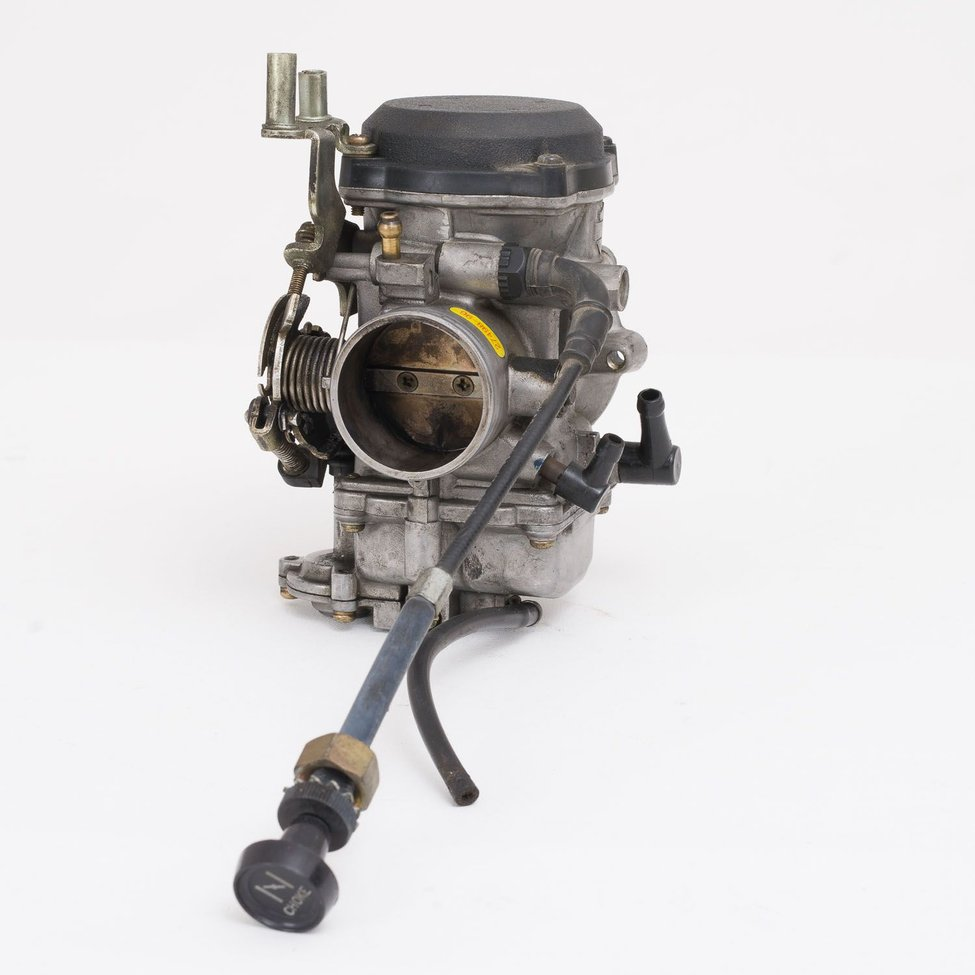
Photo: HDForums · Keihin CV Carb + Air Cleaner + Manifold · All rights reserved
The CV carburetors used on many Harleys have a cable-operated butterfly plus a slide and needle that move in response to a pressure difference. The Super E has no vacuum-operated slide, giving it a different response to the rider’s throttle input.
Its appeal lies in direct throttle operation, a compact body, and straightforward adjustment. Jets and accelerator-pump delivery can be changed, while a broad supply of parts and rebuild kits supports long-term maintenance.
Without a vacuum slide, there is no slide diaphragm to inspect. The Super E still has an accelerator-pump diaphragm, seals, and other parts that need normal maintenance.
However, a healthy CV carburetor properly tuned to the engine remains a good choice for everyday riding. Its pressure-operated slide adjusts the air passage to suit operating conditions. Fitting a Super E does not guarantee more power, better fuel economy, or easier riding on every bike.
Many Harley CV carburetors also have accelerator pumps. Pump presence alone therefore does not distinguish the Super E from every CV; the particular models and years being compared matter.
Super B, Super E, or Super G?

Photo: Neofactory · All rights reserved
Photo: S&S Cycle / FortNine · All rights reserved
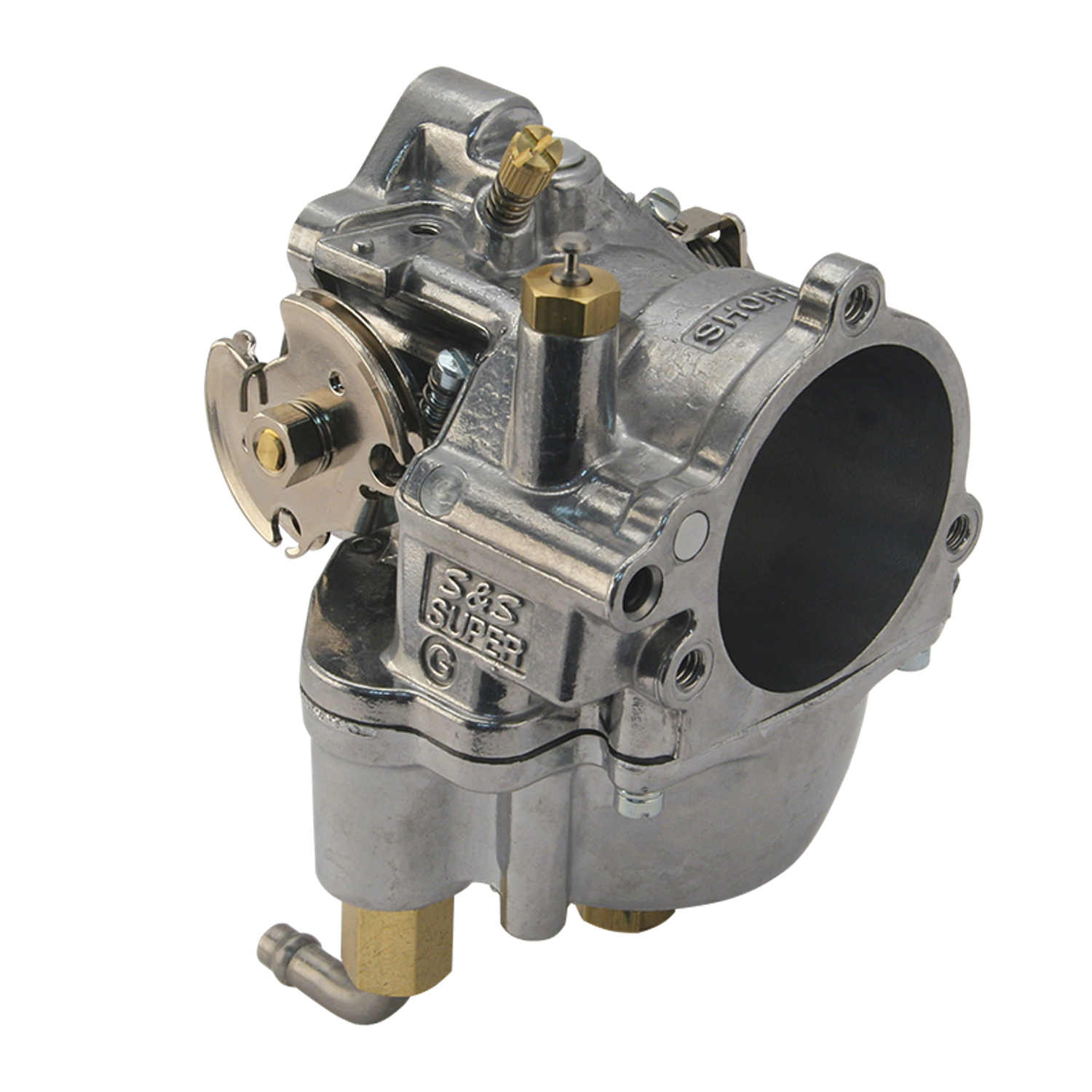
Photo: S&S Cycle / Customhoj · All rights reserved
The Super B and Super E have similar throttle-bore and venturi dimensions. A major difference is that the original factory Super B has no accelerator pump, while the Super E has an adjustable pump and a shorter body.
The Super B still appeals to builders seeking a period custom look, as well as riders whose engines are already well matched to it. The absence of a pump does not automatically make it inferior to a newer carburetor, but setup and throttle technique may need more attention.
The Super G is larger, with a throttle bore of approximately 2¹⁄₁₆ inches (52.4 mm) and a venturi of approximately 1¾ inches (44.5 mm). S&S recommends it for modified engines of roughly 100 cubic inches (1,639 cc) and larger.
Displacement is not the only consideration. Cylinder heads, camshaft, compression, exhaust, and the intended rpm range all matter. A large engine built mainly for low-to-midrange riding does not automatically need a Super G.
| Carburetor | Key features | Typical application |
|---|---|---|
| Keihin CV on many Harleys | Pressure-operated slide; adaptable to varied riding conditions. | Stock or moderately modified engines within its capacity, with an emphasis on everyday riding. |
| S&S Super B | Simple construction and period custom looks; no pump on the original version. | Vintage or custom builds, and engines deliberately configured around this carburetor. |
| S&S Super E | Short body, direct throttle operation, and an adjustable accelerator pump. | Stock and modified Big Twins or Sportsters, subject to the needs of the individual engine. |
| S&S Super G | Larger air passage for greater airflow capacity. | Large modified engines whose overall specification requires more airflow. |
An oversized carburetor can weaken air velocity and the metering pressure signal at low rpm, affecting response and making tuning harder. S&S therefore advises against the Super G on small, low-compression engines and states that if you are unsure between an E and a G, consider the Super E first.
Even though a Super E kit is available for a stock Sportster 883, it will not necessarily deliver better low-speed response than the original CV. Physical fit and a good operating match are separate questions to consider before choosing a carburetor.
A Good Carburetor Needs a Healthy Engine
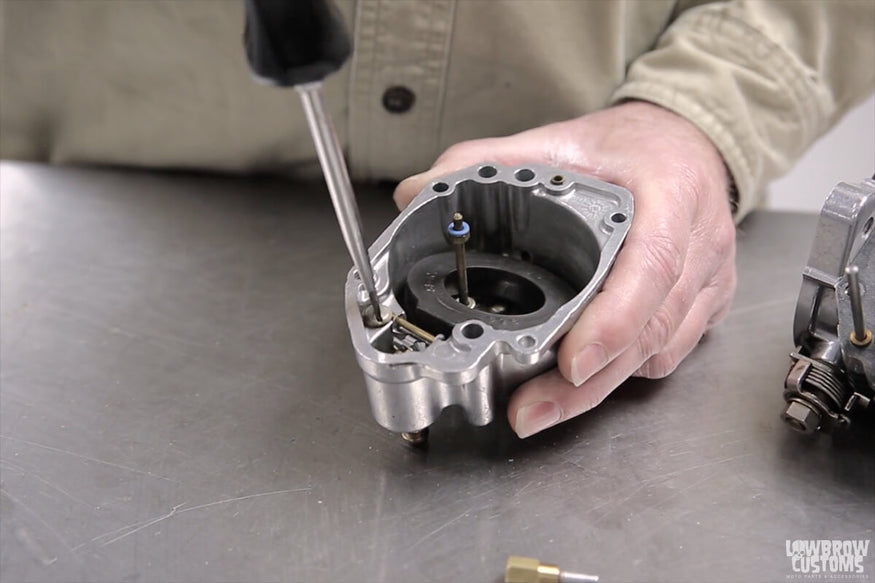
Photo: Lowbrow Customs · All rights reserved
Before turning screws or changing jets, check fuel delivery, float level, intake leaks, ignition, and engine condition. Spitting or hesitation is not always a mixture problem. An unsuitable camshaft and exhaust combination can also make tuning difficult.
The Super E combines a size suitable for a broad range of engines with a compact body, direct throttle operation, and an adjustable pump. It is an appealing option for riders who want to change their bike’s character and understand how it works.
Knowing what each component does lets us say more than “this carb feels good.” If the bike starts running differently one day, we also have a clearer idea of where to begin looking.
Explore the Super E in 3D
Drag to rotate and pinch or scroll to zoom. Select components from the menu, enable the cutaway, or separate the float bowl to look inside. This is an illustrative model based on documents and photographs, not a CAD model with every dimension and position verified.
Maintenance Parts
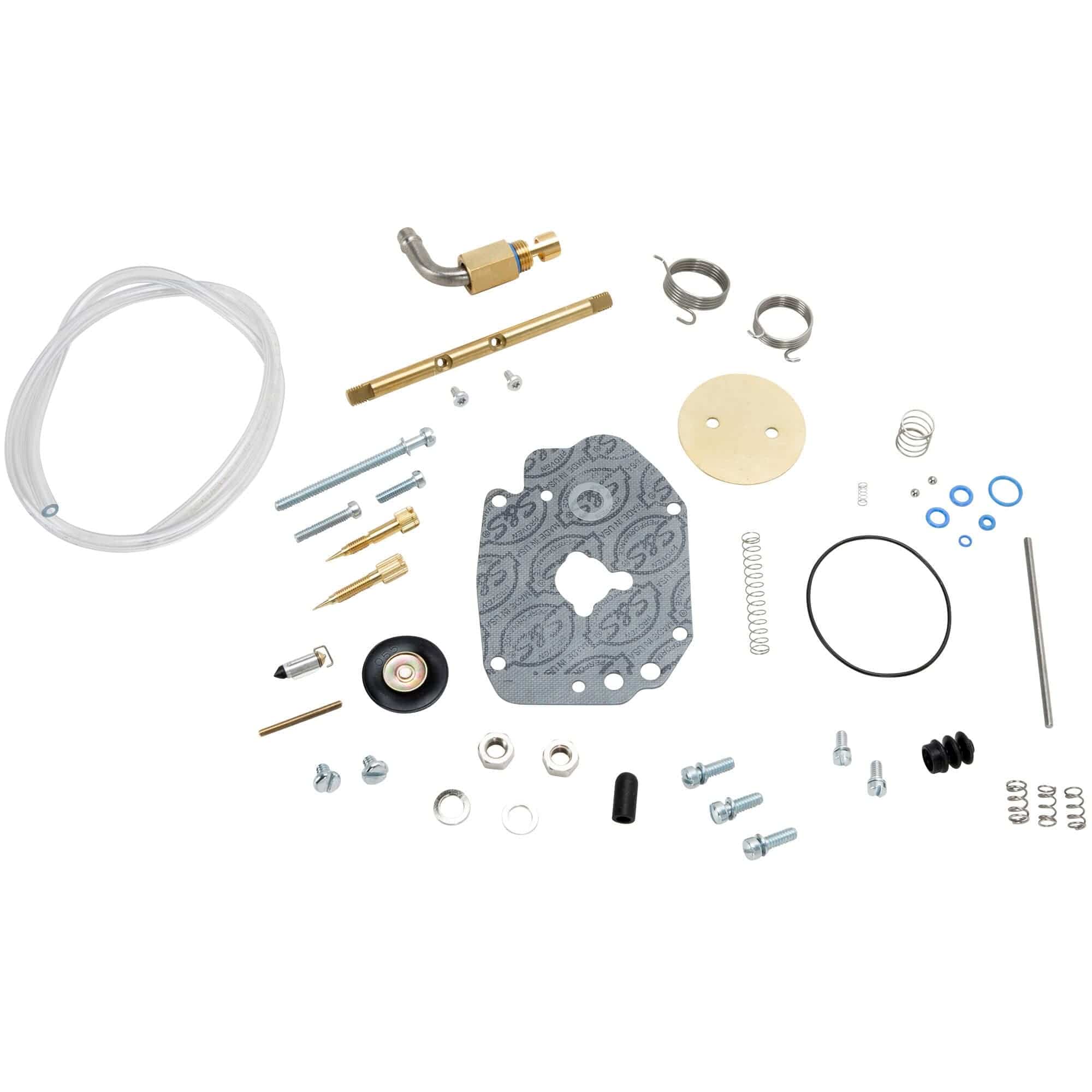
Photo: S&S Cycle / Lowbrow Customs · All rights reserved
Image and Media Credits
- S&S Teardrop Air Cleaner Kit · cover, filter element, and backing plate — S&S Cycle / J&P Cycles
- S&S Super E Shorty · carburetor body and throttle linkage — S&S Cycle / FortNine
- S&S Super B · long body and B identification mark — Neofactory
- S&S Super G · designed for engines requiring greater airflow — S&S Cycle / Customhoj
- Harley Keihin CV · slide diaphragm cover on top — HDForums · Keihin CV Carb + Air Cleaner + Manifold
- Inspecting the S&S Super E float assembly on the workbench — Lowbrow Customs
- Removing the Super E accelerator-pump housing to access the diaphragm — Lowbrow Customs
- S&S Super E rebuild kit #11-2923 · seals, gaskets, springs, and service parts — S&S Cycle / Lowbrow Customs
- Super E/G float-bowl assembly with float and related components — S&S Cycle / Cycle Gear
Product and maintenance photographs remain the copyright of their creators or rights holders identified at the linked sources. They illustrate the products and components discussed here. Credit does not grant republication rights or imply endorsement by the manufacturers or photographers.
Animation and 3D model: prepared for HDP Garage to explain operating principles. Some shapes and passages are simplified or approximate. They do not replace a service manual or manufacturing drawings.