
Engine Oil Explained: Which Grade Is Right for Your Harley?
10W-40, 20W-50 or SAE 60: what do the numbers on an oil bottle mean? Should you choose by the bike’s age, the weather or a friend’s advice? Before the next oil change, get to know the grades so you can choose for your bike with confidence.
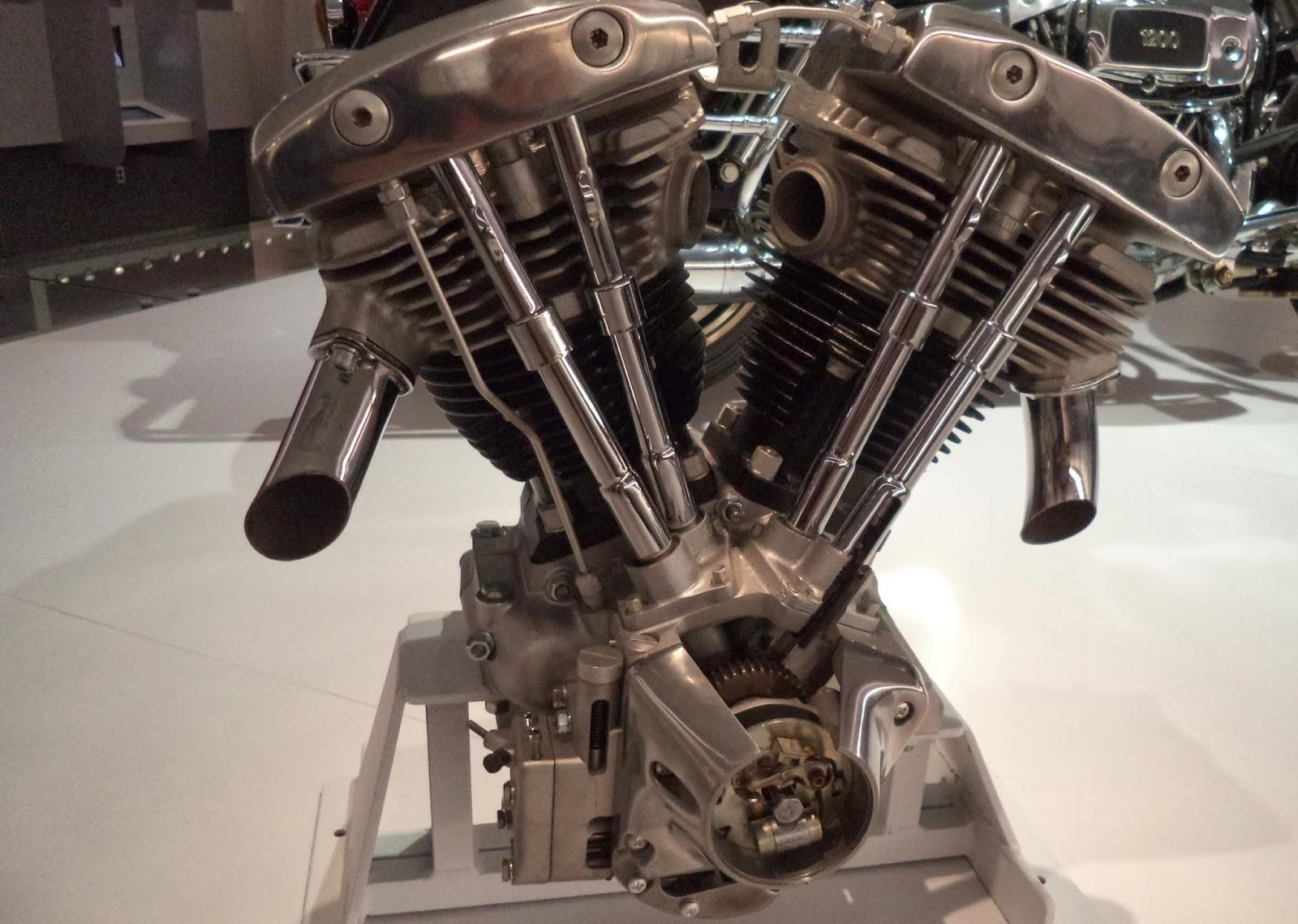
When you take your bike in for an oil change, a familiar question comes up: “Which grade should I use?” Some riders stick with the same oil every time. Others have heard that older engines need thicker oil, or that Thailand’s hot climate calls for a higher number.
Owners of older Harleys may be familiar with SAE 50 or SAE 60, while many other bikes have always used 20W-50. When 15W-50 appears as an option, it is easy to wonder whether that lower first number makes it too thin for your engine.
Before deciding by the numbers, remember this: an engine oil’s SAE grade describes viscosity, not quality. A higher number does not automatically mean a better choice.
20W-50 does not mean 20–50 degrees
Engine cranking and oil pumpability
W = Winter
Viscosity at high temperature
Includes high-shear requirements
Let’s take 20W-50, a familiar grade among Harley riders, as an example.
20W identifies low-temperature performance. The W stands for Winter and relates to engine cranking and oil pumpability under specified test conditions. A lower W grade meets requirements at lower test temperatures.
50 identifies the high-temperature viscosity grade. This includes viscosity testing at 100°C and additional high-temperature, high-shear requirements.
These numbers are not degrees Celsius. A 20W-50 oil is not restricted to ambient temperatures between 20 and 50°C.
Another common misunderstanding is that oil becomes thicker as the engine heats up. It actually becomes thinner as temperature rises. A multigrade formulation is designed to meet both the low- and high-temperature requirements.
How do 10W-40, 15W-50 and 20W-50 differ?
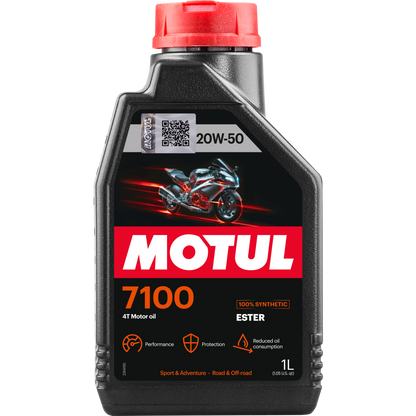
Product image: © MOTUL / Motul USA · All rights reserved
| Example grade | What it means |
|---|---|
| 10W-40 | Meets low-temperature grade 10W and high-temperature grade 40 |
| 15W-50 | Meets low-temperature grade 15W and high-temperature grade 50 |
| 20W-50 | Meets low-temperature grade 20W and high-temperature grade 50 |
Looking only at the second number, SAE 50 covers a higher high-temperature viscosity range than SAE 40. But 15W-50 is not necessarily thinner than 20W-50 when hot simply because its first number is lower.
Both fall within the SAE 50 high-temperature grade, although their actual viscosity values can differ within that grade.
If the manufacturer approves 15W-50 for your bike, do not assume it is only for cold countries or cannot protect an engine in hot weather. Consider the oil’s complete specification, rather than the W grade alone.
Does every air-cooled engine need 20W-50?
Do not choose solely by the cooling system. Although many Harleys specify or permit 20W-50, engine designs differ in their component clearances, oil pumps and operating temperatures.
Likewise, not every liquid-cooled engine requires 10W-40. Manufacturers select viscosity with oil circulation, oil-film protection and engine loads in mind.
Start with the owner’s manual for the exact model and year, then check which grades are permitted for the ambient temperatures you expect to ride in.
If the engine has been replaced or rebuilt, ask the engine builder for the required oil specification. Its internal setup may differ from the factory design, especially if pistons, the oil pump or component clearances have been changed.
What about the SAE 50 and SAE 60 used in older Harleys?
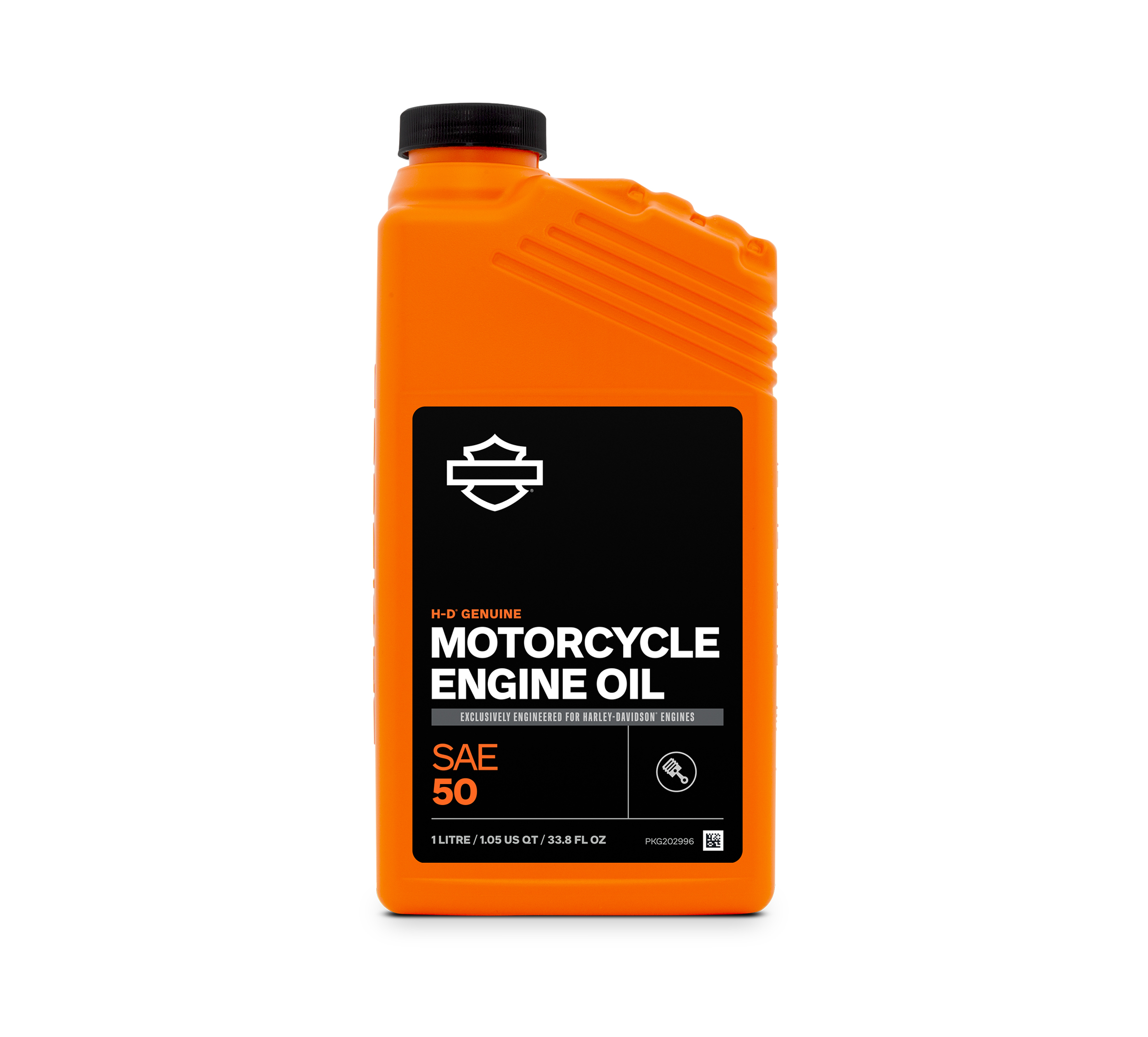 SAE 50
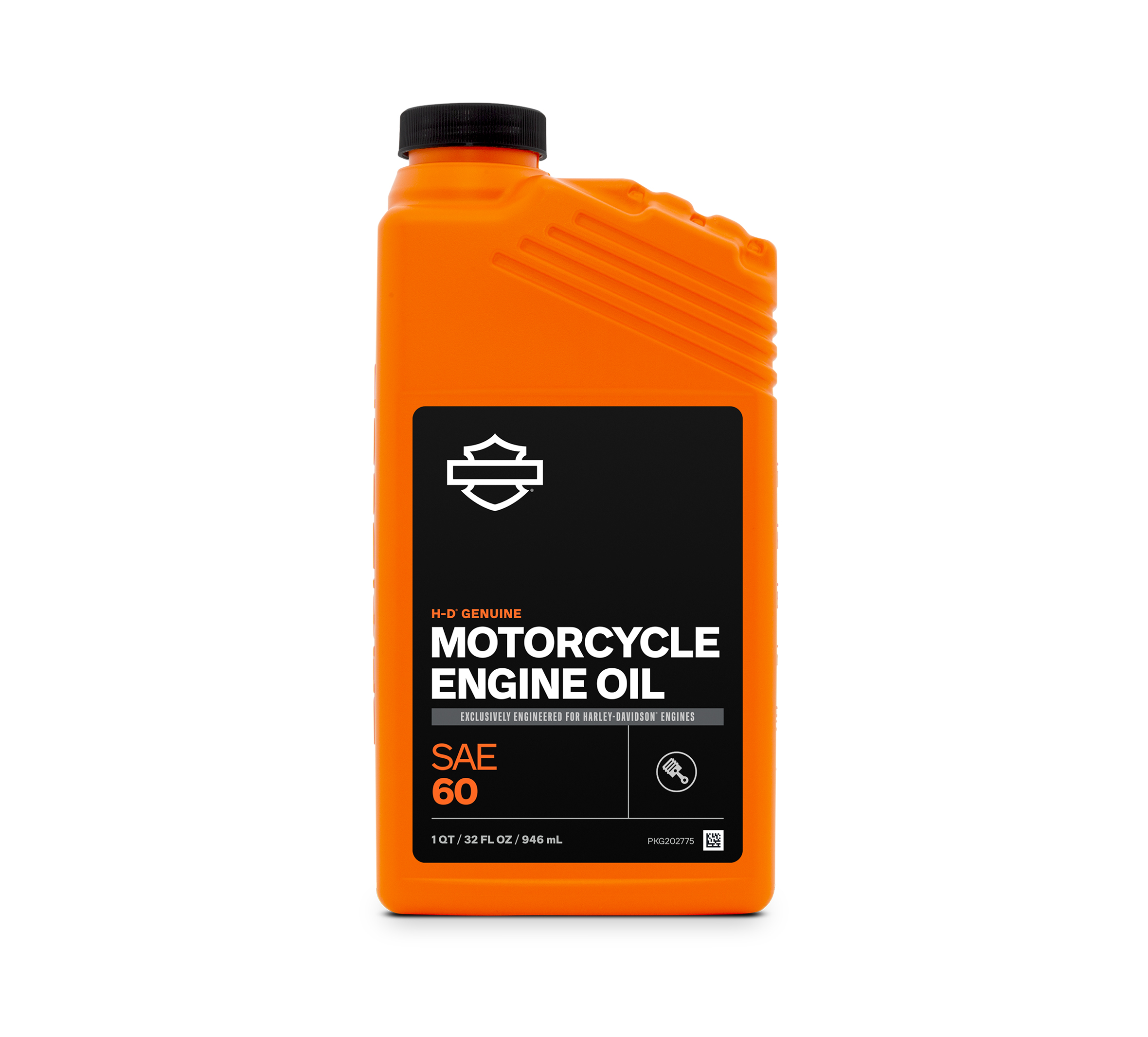 SAE 60
Product images: © Harley-Davidson / SAE 50 · SAE 60 · All rights reserved
Alongside multigrade oils, there are single-grade, or monograde, oils such as SAE 50 and SAE 60. These appear in recommendations for some Harley models, including older bikes used in hot weather.
The absence of a W rating does not mean the oil has no low-temperature characteristics. It means a low-temperature grade such as 10W or 20W is not stated on the label. The numbers 50 and 60 still identify the high-temperature viscosity grade.
SAE 50 and 20W-50 therefore share the same high-temperature grade, but their behavior as temperatures fall can differ substantially. SAE 60 falls within a higher high-temperature viscosity range than SAE 50.
| Monograde oil | Example conditions in Harley-Davidson charts for certain models |
|---|---|
| SAE 50 | Lowest expected ambient temperature above approximately 16°C |
| SAE 60 | Lowest expected ambient temperature above approximately 27°C |
The key is the lowest ambient temperature the bike is expected to encounter, rather than the afternoon temperature alone. A hot day with a pre-dawn start or a ride into the mountains can present different conditions from a daytime ride in town.
The figures in the table are not minimum engine-oil temperatures of 16 or 27°C. Nor are they recommendations for every Harley engine. Confirm that your bike’s manual permits the relevant grade.
For an older engine whose manual or builder specifies SAE 50 or SAE 60, a monograde oil can be a sound choice. That does not mean every old Harley in Thailand should use SAE 60. Humidity is not a direct criterion for choosing the viscosity grade. Temperature, operating conditions and engine requirements are what matter.
Older bike, hotter weather: should you choose thicker oil?
If the engine specification permits SAE 50 or SAE 60, choose according to the expected temperatures and use. Do not increase viscosity simply because the bike is old.
Oil that is too thick for the specification can increase resistance and alter flow through the system. Oil that is too thin may not maintain an appropriate lubricating film under that engine’s loads.
If the engine starts consuming oil, becomes noisier or shows abnormal oil pressure, investigate the cause first. Thicker oil may change some symptoms, but it does not repair worn parts.
The observation that “the engine sounds quieter after the change” is useful, but it does not establish that the oil is a better match. Consider overall operation and the engine’s specifications as well.
The viscosity grade is right. What else matters?
Check performance standards such as API and the motorcycle manufacturer’s requirements. Oils with the same viscosity grade can have different formulations and performance. An SAE grade alone does not tell you how well an oil controls deposits, prevents wear or resists degradation.
If the engine, transmission and wet clutch share the same oil, choose an oil intended for wet-clutch use, such as a product meeting JASO MA or MA2, as required by the motorcycle manufacturer. The viscosity must also match the manual. In addition to lubricating the engine and gears, the oil must provide friction characteristics that let the clutch plates engage and transmit power properly.
An oil not formulated for this system—particularly certain fuel-economy formulations designed to reduce friction—may cause clutch slip or altered engagement. The question is whether the friction characteristics suit a wet clutch, rather than whether every oil that reduces friction is unsuitable.
On Harleys with separate engine, transmission and primary lubrication, select the correct oil for each compartment. “Motorcycle engine oil” on the label does not mean it can be used everywhere.
Mineral, Semi-Synthetic and Full Synthetic describe the base-oil approach and formulation. A suitable synthetic oil may offer advantages in stability and resistance to degradation, but Full Synthetic does not mean suitable for every engine, or permission to extend oil-change intervals at will.
A monograde oil is not necessarily additive-free either. Choose an engine oil with the performance required by the engine, rather than selecting solely because the label says SAE 50 or SAE 60.
Choose correctly, then keep a record
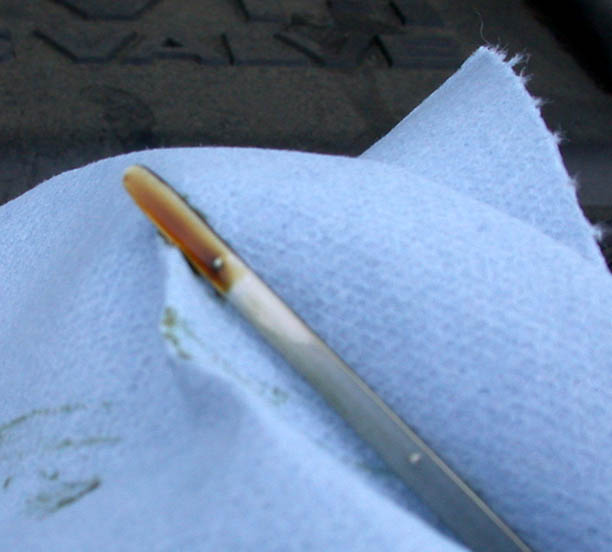
Photo: Dvortygirl / Wikimedia Commons · CC BY-SA 3.0 · Full image, resized for layout

Before buying, confirm the model and year, the viscosity and performance standards in the manual, whether the engine remains in standard specification, and the temperatures you expect to ride in.
After an oil change, record the product name, grade, date and mileage. Check the level using the procedure in the manual: the right oil still needs to be filled to the correct level. Harley procedures can differ by model in both engine temperature and motorcycle position, so do not apply one method to every bike.
The right engine oil starts with the requirements of your particular engine. Understanding the numbers on the bottle makes buying oil and discussing it with your mechanic easier. Whether that means 20W-50 for an everyday bike or SAE 60 for an engine that permits it, the choice should be based on what suits your motorcycle.
Image credits
Opening image: supplied by the user for this article.
20W-50 grade illustration: prepared for HDP Garage.
MOTUL bottle image: © MOTUL, from Motul USA. SAE 50 and SAE 60 bottle images: © Harley-Davidson, from the manufacturer’s website. These product photographs are copyrighted and illustrate the products discussed. They are not presented as openly licensed images or as evidence of manufacturer endorsement.
Dipstick photograph: Dvortygirl / Wikimedia Commons, used under CC BY-SA 3.0, linked beneath the image. Adaptations must retain attribution and be distributed under the same or a compatible license.